

Podiatry practice revenue: 5 Steps to Unlock Profit
The Financial State of Modern Podiatry
Podiatry practice revenue has faced unprecedented pressure. To improve your practice’s financial performance, here’s what you need to know:
Key Financial Challenges Facing Podiatry Practices:
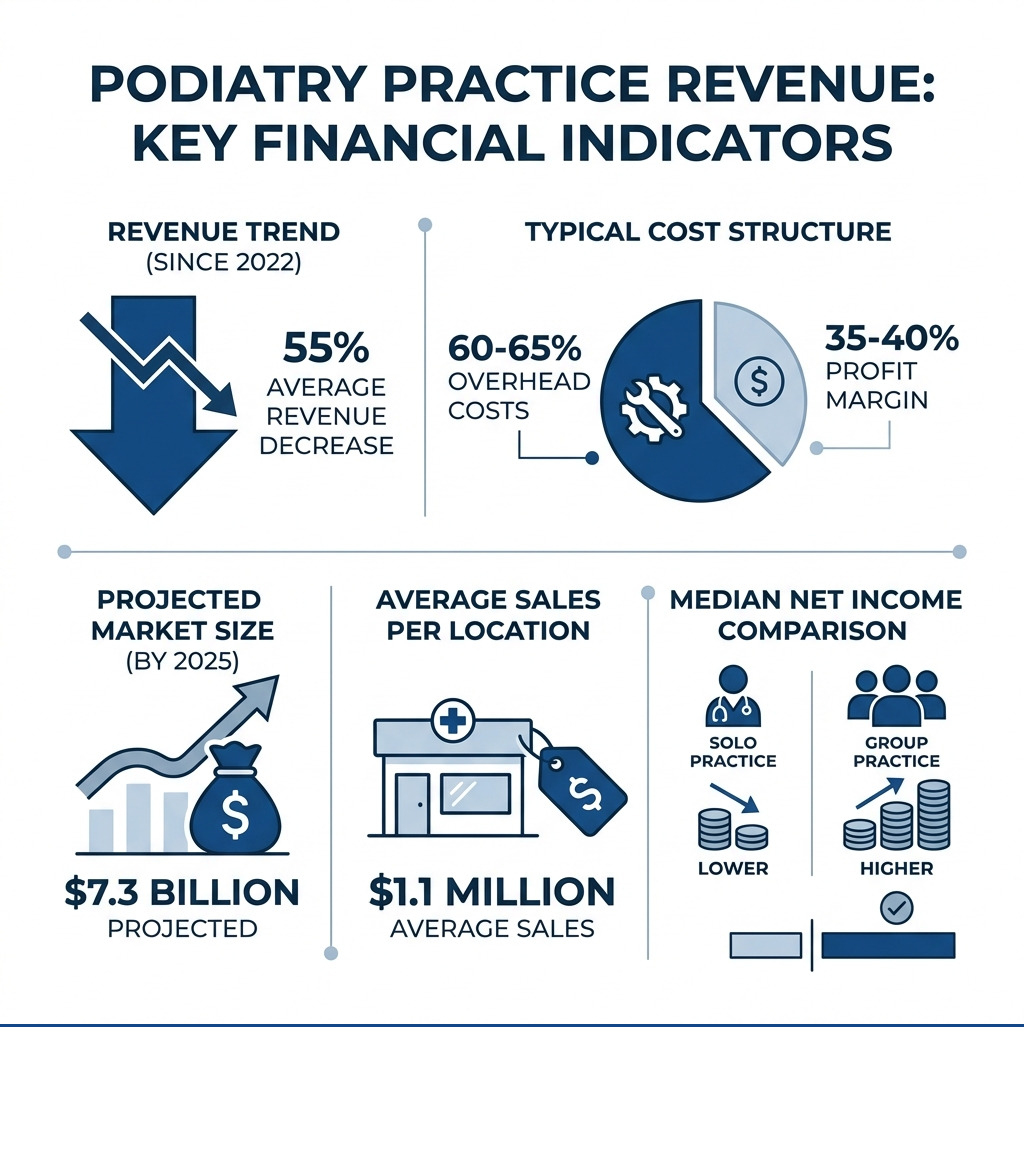
- Revenue decline: Podiatry physician practice revenues have decreased by an average of 55% since 2022
- High overhead: Most practices run at 60-65% overhead, leaving only a 35-40% profit margin
- Rising costs: General operating costs for medical practices have increased 52.6% since 2001
- Market growth: Despite challenges, the industry is projected to reach $7.3 billion by 2025 (2.8% CAGR)
- Average practice size: $1.1 million in sales per location in 2024
The reality is stark: nearly 25% of practices struggle with financial stability due to inefficient revenue management. Solo practitioners have been hit hardest, with median net income dropping to historic lows when adjusted for inflation.
However, while the pandemic accelerated financial challenges, it also created opportunities. Practices using telehealth maintained stable patient numbers, and those that strategically cut costs while investing in staff saw better outcomes. Group practices also showed significantly better financial resilience.
The path from red to green is about working smarter, not harder. Understanding your financial baseline and implementing targeted strategies can transform your practice’s profitability. This guide will walk you through diagnosing your financial health, identifying revenue opportunities, controlling costs, and optimizing billing to show how practices are generating over $1 million in new revenue.
Diagnosing Your Practice’s Financial Health

To improve your podiatry practice revenue, you must first understand its current financial health. This means diving deep into your financial statements. Most practices operate with an overhead of 60-65% of collections, leaving a 35-40% profit margin, but you need to look beyond the surface to understand true profitability.
A crucial step is “accounts normalization”—adjusting financial records to reflect true underlying profit by separating personal expenses from business costs. While mixing them may offer tax benefits, it skews your practice’s perceived value. Normalizing accounts allows you to calculate your Earnings Before Interest, Taxes, Depreciation, and Amortization (EBITDA), providing a clearer picture of operational performance. This is vital for identifying financial challenges, understanding cash flow, and determining your practice’s valuation.
Understanding Key Operational Costs
Managing expenses is as important as generating revenue. Focusing on expense reduction is highly effective, as every dollar saved becomes a dollar of profit. The top expenses for most podiatry practices include staff salaries, medical supplies, rent, insurance, lab expenses, and marketing. If your practice includes other podiatrists, their salaries are also a significant factor.
Operational costs for medical practices have climbed 52.6% since 2001. For example, while gross salary payments dropped 8% in 2020, they had increased 5% the previous year, showing how these figures fluctuate. Understanding these patterns and identifying your top expenses is the first step toward smart cost control.
The Lingering Impact of COVID-19
The COVID-19 pandemic significantly impacted podiatry practice revenue, with physician practice revenues decreasing by an average of 55% since 2022. Patient cancellations and postponed procedures reduced patient volume. For solo practitioners, this meant a 7% drop in median net income in 2020, a 20-year low when adjusted for inflation.
However, practices showed resilience. Many strategically cut costs in advertising (down 36% in 2020) and fixed equipment (down 20%). A significant 45% of practices leveraged the Paycheck Protection Program (PPP), with an average loan of $57,615, to retain staff and cover costs.
One of the biggest shifts was the surge in telehealth, with 60% of practices using it in 2020 (up from 36% pre-COVID). This helped maintain stable patient numbers and ensure continued care. The pandemic also highlighted the importance of clear safety protocols to rebuild patient trust. The pandemic’s ripple effects will likely continue to shape practice models, with a potential for increased consolidation and a focus on wound care.
Strategic Growth: How to Increase Your Podiatry Practice Revenue

With your financial health diagnosed, let’s focus on growth. Increasing podiatry practice revenue requires strategic engagement, trust-building, and expanding your reach—not just seeing more patients. The podiatry industry is shifting due to an aging population and rising rates of conditions like diabetes, creating significant demand for specialized foot care.
Effective digital marketing and Search Engine Optimization (SEO) are crucial for establishing a strong online presence and communicating with potential patients. Building community relationships also improves your reputation and expands your patient base. A robust communications plan using webinars, videos, email, and social media can foster stronger patient relationships. A positive practice culture focused on patient satisfaction and staff efficiency will organically drive referrals and retention, sustaining revenue growth.
Diversifying Your Podiatry Practice Revenue Streams
To boost your podiatry practice revenue, explore opportunities beyond traditional office visits. Diversifying revenue streams improves financial stability and allows you to offer more comprehensive care.
Here are some high-value ancillary services:
- Custom Orthotics: A natural fit for podiatry, offering custom orthotics directly provides patient convenience and a consistent revenue stream, despite fluctuating lab expenses.
- Durable Medical Equipment (DME) Sales: Offer other DME directly, such as specialized footwear, braces, or walking aids for diabetic or post-operative patients.
- Physical Therapy: Integrating physical therapy services focused on lower extremity conditions can complement your treatments and provide a holistic approach to recovery.
- Retail Foot Care Products: Stocking high-quality products like specialized creams, antifungal treatments, or compression socks generates additional income from items patients already need.
- Diabetic Foot Care Programs: Offering comprehensive preventative care, education, and regular screenings for diabetic patients is a vital service and a significant revenue opportunity.
Incorporating these services can tap into new revenue sources and improve patient outcomes. For more strategies, see our guide on High-Profit Procedures: Smart Strategies Your Guide to Podiatry Revenue Growth.
The Growing Role of Telehealth
Telehealth is now a core part of modern podiatry, changing patient care and revenue generation. The pandemic accelerated its adoption, with 60% of practices using telemedicine in 2020, up from 36% pre-COVID. This shift is permanent, with telehealth expected to play a significant future role.
For your podiatry practice revenue, telehealth allows for remote follow-up consultations, chronic condition monitoring, and patient education. This expands your reach beyond your immediate area, attracting new patients from across New Jersey, Nevada, North Carolina, Kentucky, or Nebraska who might face transportation barriers.
Insurance reimbursement for telehealth is now more common, and patients are on board, with 91% of Medicare beneficiaries reporting satisfaction with video visits. To maximize this, explore telehealth options with insurance carriers and educate patients and staff on the platforms. While reimbursement policies may evolve, telehealth’s role in maintaining patient numbers and offering convenient care is undeniable. For more on industry trends, refer to the Podiatrists in the US – Market Research Report (2015-2030).
Enhancing Patient Communication and Retention
In today’s competitive landscape, patient communication and retention are critical drivers of podiatry practice revenue. Happy, informed patients are more likely to return, refer others, and adhere to treatment plans.
Every patient interaction matters. Automated appointment reminders can significantly reduce no-shows, while post-visit follow-ups show you care and can catch potential issues early. Regularly conducting patient satisfaction surveys provides invaluable feedback for improvement. Finally, maintaining a strong online presence through social media (used by 51% of practices in 2019) and a professional website (79% of practices had one in 2019) is crucial for fostering community connection and trust.
Boosting Your Bottom Line: Mastering Cost Control
While generating revenue is exciting, managing costs is equally impactful for your podiatry practice revenue. Focusing on expense reduction directly increases profit. This means smart expense management, optimizing staffing, and automating processes to reduce overhead without compromising quality care.
Most podiatry practices have an overhead of 60-65%, leaving a 35-40% margin. Every dollar saved on expenses improves profitability. The goal is to identify inefficiencies and streamline operations for optimal resource use.
Smart Spending on Supplies and Services
Smart spending on supplies and services is a prime area for cost control. A highly effective strategy is leveraging Group Purchasing Organizations (GPOs). Joining a GPO allows your practice to negotiate better vendor prices collectively, leading to supply cost savings of 10-15% or more.
Beyond GPOs, actively negotiate with all vendors for better rates and explore alternative suppliers. Regularly reviewing insurance rates and plans is also recommended. Streamlining non-clinical operations frees up staff time for patient care and efficient billing. Even small percentage savings on supplies, which can cost around $10,000 annually, add up quickly.
Optimizing Staffing and Workflow
Your team is your greatest asset, but staffing is also your largest expense. Optimizing staffing and workflow is crucial for boosting your podiatry practice revenue without compromising care.
Start with clear job descriptions to prevent role overlap and ensure optimal staffing levels. Cross-training staff provides flexibility during busy periods or absences. Next, automate administrative tasks like scheduling, intake forms, and patient communication. Automation reduces errors, saves time, and allows staff to focus on patient-facing duties. Improving patient flow from check-in to check-out also improves efficiency and the patient experience. For more insights, explore our resources on Practice Management & Growth.
The Power of Process: Optimizing Revenue Cycle Management (RCM)
Robust Revenue Cycle Management (RCM) is critical for maximizing podiatry practice revenue. RCM is your practice’s financial circulatory system; poor flow puts its health at risk. Effective podiatry RCM is pivotal for sustained growth, as nearly 25% of practices struggle financially due to inefficient revenue management.
RCM covers the entire process from patient registration to final payment, and each step is a chance to capture or lose revenue. Daily insurance billing, prompt denial management, and clear patient payment plans are essential. Without a strong RCM process, even a busy practice can face cash flow problems. Continuously review your cash flow and optimize every step of your revenue cycle.
| Feature | In-House Billing | Partnering with a Specialized Podiatry Billing Service |
|---|---|---|
| Control | High direct control over processes | Reduced direct control, but high transparency |
| Expertise | Requires in-house staff training & retention | Access to dedicated, specialized podiatry billing experts |
| Cost | Salaries, benefits, training, software, space | Fee-based (percentage of collections or flat fee) |
| Efficiency | Can be efficient with dedicated staff & tech | Often higher efficiency due to specialization & scale |
| Compliance | Requires continuous internal monitoring | Built-in compliance expertise & updates |
| Denial Management | Relies on internal staff’s capacity & skill | Specialized teams dedicated to appeals & follow-up |
| Scalability | Can be challenging to scale quickly | Easily scalable with practice growth |
| Focus | Diverts practice resources from patient care | Allows practice to focus 100% on patient care |
Optimizing Billing for Maximum Podiatry Practice Revenue
Optimizing billing is the most direct way to increase podiatry practice revenue. This requires accuracy, efficiency, and persistence. Incorrect coding is a primary cause of denials and lost revenue. Meticulous use of podiatry-specific ICD-10, CPT, and HCPCS codes is paramount to ensure you get paid correctly and on time.
We recommend daily insurance billing and promptly addressing all denials. Many denials can be successfully appealed with the right follow-up. Regularly auditing your billing process helps identify errors and ensure compliance. For comprehensive guidance, see our resources like The Foot-Friendly Guide to Podiatry Billing and Coding and Audit Proof Your Practice: A Guide to Podiatry Billing Compliance. Vigilance is key, as 4% of practices faced audits in 2019 and 2020.
Leveraging Technology for Efficiency
Leveraging technology is a necessity for optimizing podiatry practice revenue. It streamlines operations, reduces overhead, and improves billing accuracy and speed.
Electronic Health Record (EHR) systems are at the forefront. Practices have generated over $1 million in new revenue by implementing custom EHR protocols. This standardization improves patient outcomes and can be efficient enough to eliminate a dedicated billing department. EHRs manage patient data and integrate with billing software, reducing errors and speeding up submissions.
Automated billing software can handle routine tasks, freeing up staff for patient care. The industry’s investment in technology is clear, with rising costs for computer services and adoption of tools like digital X-rays (used by 69% of practices in 2019). For more on these tools, check out our Technology in Podiatry section, and if you’re considering an EHR transition, our guide on Navigating Your Transition from TrakNet: Find Your Perfect EHR Match with Beacon can help.
Future-Proofing Your Practice: Key Metrics and Long-Term Planning
Future-proofing your practice requires proactive financial planning and understanding its long-term value. This includes succession planning for a smooth transition and knowing the factors that influence your practice’s valuation.
Knowing your practice’s worth is crucial for tax planning, restructuring, and financial planning. The question, “How much is my practice worth?” is complex. The ultimate price is what a buyer is willing to pay, which may differ from your perceived worth.
Preparing for a sale is a multi-year endeavor, so start at least two to three years in advance. This allows time to clean up financial statements, organize documents, and ensure the practice can operate without you. Understanding post-sale tax obligations is paramount; engage expert accountants and lawyers specializing in healthcare transactions from the start to avoid large, unexpected tax bills. The ACFAS 2021 Practice Survey Final Report also provides valuable insights into compensation and productivity.
Tracking the KPIs That Matter
To effectively manage and grow your podiatry practice revenue, you must track the right Key Performance Indicators (KPIs). As our guide Live and Die by KPIs: The Podiatrist’s Guide to Practice Growth and Profitability emphasizes, these numbers are the pulse of your practice.
Essential KPIs to monitor include:
- Average Revenue Per Patient: How much revenue each patient generates.
- Claim Denial Rate: A high rate signals problems in your billing process.
- Days in Accounts Receivable (A/R): How long it takes to get paid. Lower is better for cash flow.
- Collection Rate: The percentage of collectible revenue you actually receive.
- Patient Acquisition Cost (PAC): The cost to acquire a new patient, which helps evaluate marketing effectiveness.
Regularly reviewing these metrics from our Financial Health & KPIs resources allows you to make data-driven decisions that impact profitability.
Understanding Your Practice’s Valuation
Understanding your practice’s valuation is critical for long-term planning. Three main valuation approaches determine your podiatry practice revenue potential and sale price:
- Cost Approach: Values the practice based on its tangible assets (equipment, inventory). This method is straightforward but often undervalues a practice by ignoring intangible assets like reputation.
- Income Approach: Estimates value based on projected future earnings (EBITDA). This is often the most relevant approach for service businesses, as buyers want to know the actual profit they can expect.
- Market Approach: Compares your practice to similar ones that have recently sold in your market to establish a realistic price.
The impact of profitability on sale price is huge. Running personal expenses through the practice, while tempting for tax savings, decreases its valuation. Podiatry practices often sell for 30-50% of the previous year’s gross collections. Factors like location (including our service areas in New Jersey, Nevada, North Carolina, Kentucky, or Nebraska), reputation, and patient demographics are also crucial. Preparing for a sale means building a practice that thrives independently with clean financials.
Conclusion: Take the Next Step Towards Profitability
Navigating the complexities of podiatry practice revenue is daunting, with challenges from declining revenues and rising overheads to pandemic impacts. However, the path to profitability is achievable and filled with strategic growth opportunities.
A multi-faceted approach is essential: diagnose your financial health, diversify revenue streams, accept technology like telehealth, and master patient communication. This also includes a relentless focus on cost control and, above all, a robust Revenue Cycle Management (RCM) system powered by accurate billing and coding, which is the bedrock of your financial success.
At Guide Podiatric Billing Services, we understand these challenges intimately. Our specialized, 100% US-based team is dedicated to maximizing your collections and streamlining your operations through podiatry-specific expertise and personalized service. By implementing these proven strategies and partnering with experts who understand the unique financial nuances of podiatry, you can transform your practice’s profitability.
Don’t let inefficient revenue management hold your practice back. Take control of your financial future today.