
Podiatry workflow optimization: Achieve Clarity 2026
Why Podiatry Workflow Optimization Matters More Than Ever
Podiatry workflow optimization is the process of streamlining every step of your practice operations—from patient scheduling to checkout and billing—to reduce inefficiencies, improve patient care, and increase revenue. Here’s what you need to know:
Key Benefits of Optimizing Your Podiatry Workflow:
- Increased Revenue: Adding just one additional patient per day through better efficiency can generate $20,000 to $40,000 in annual profit
- Improved Patient Experience: 26% of patients are willing to switch providers for high-quality digital services
- Reduced Staff Burnout: Streamlined processes free up time for meaningful patient care instead of administrative chaos
- Better Patient Outcomes: More efficient workflows mean more time with patients and higher quality care
- Future-Ready Practice: With demand for foot and ankle procedures predicted to rise 61.9% by 2050, optimized workflows are essential
If you’re a busy podiatrist drowning in paperwork, dealing with delayed payments, or watching patients wait too long, you’re not alone. Many practices struggle with inefficient processes that hurt both patient care and your bottom line.
The good news? Small changes create big results. You don’t need to overhaul everything at once. Whether it’s implementing digital check-in, reorganizing your exam rooms, or adopting podiatry-specific software, each improvement compounds to transform your practice from chaotic to efficient.
This guide walks you through the complete blueprint for optimizing every aspect of your podiatry workflow—from the moment a patient books an appointment to how you close the loop on care and revenue.
The Blueprint for Podiatry Workflow Optimization
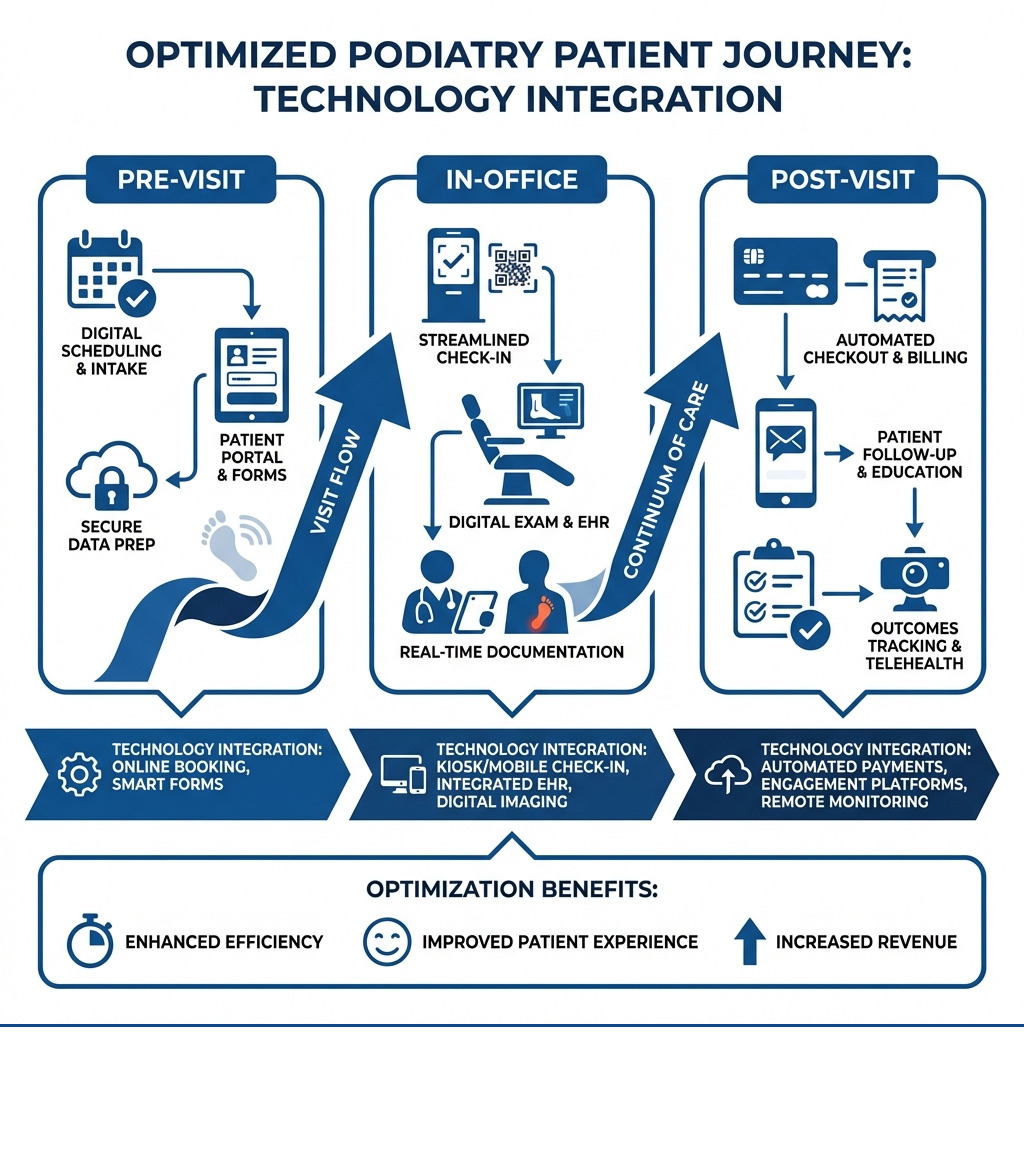
At its heart, podiatry workflow optimization is about creating a seamless, efficient patient journey. This journey can be broken down into three core components: the pre-visit, in-office, and post-visit phases. By mapping out each step, we can identify bottlenecks, implement solutions, and ensure a smooth experience for both patients and staff. This holistic approach ensures that every interaction, every process, and every piece of technology works in harmony to support your practice’s goals.

Pre-Visit: Setting the Stage for a Seamless Appointment
The journey to an optimized workflow begins even before a patient steps through your door. The pre-visit phase is crucial for setting expectations, gathering necessary information, and ensuring a smooth arrival.
- Digital Patient Intake: Gone are the days of clipboards and endless paper forms. Digital patient intake allows patients to complete their paperwork online, at their convenience, before their appointment. This reduces wait times, administrative burden for your front desk staff, and ensures accuracy.
- Online Scheduling: Offering online scheduling empowers patients to book appointments that fit their busy lives. This convenience is a significant factor in patient satisfaction; in fact, 26% of patients are willing to switch to a new provider for high-quality digital services. Self-scheduling can also lead to fewer no-shows and a more efficiently filled schedule.
- Automated Appointment Reminders: Reduce your no-show rate and ensure patients arrive on time with automated reminders via text, email, or phone calls. This simple step saves staff time and keeps your schedule flowing.
- Insurance Eligibility Verification: Don’t let insurance surprises disrupt patient care or your revenue cycle. Automating insurance verification before the patient’s arrival streamlines the check-in process and helps prevent denied claims later on. Integrating intake forms with insurance verification ensures a proactive approach.
By optimizing these pre-visit steps, we not only improve patient satisfaction but also significantly reduce the administrative workload on your team, allowing them to focus on more complex tasks. For more insights into growing your practice, check out our resources on Practice Management & Growth.
In-Office: Mastering Patient Flow and Clinical Efficiency
Once patients arrive, efficient in-office processes are paramount. This involves understanding the difference between patient flow and cycle time, and actively working to reduce bottlenecks.
Patient flow describes how patients move through your practice, from check-in to examination, treatment, and checkout. Cycle time is the total amount of time a patient spends in your office, from arrival to departure. An optimized patient flow directly leads to a reduced cycle time. Our primary goal is to maximize the time patients spend receiving care (value-added time) and minimize time spent waiting (non-value-added time). A good ratio of value-added time to non-value-added time is about 1.5 times the value-added time.
Here’s how we can master in-office efficiency:
- Reducing Wait Times: Long wait times are a major patient dissatisfier. Strategies include optimized scheduling, pre-visit digital intake, and efficient rooming processes. Utilizing practice management software to track patient movement can help identify specific bottlenecks, whether it’s at the front desk, during data entry into EHRs, or waiting for the physician.
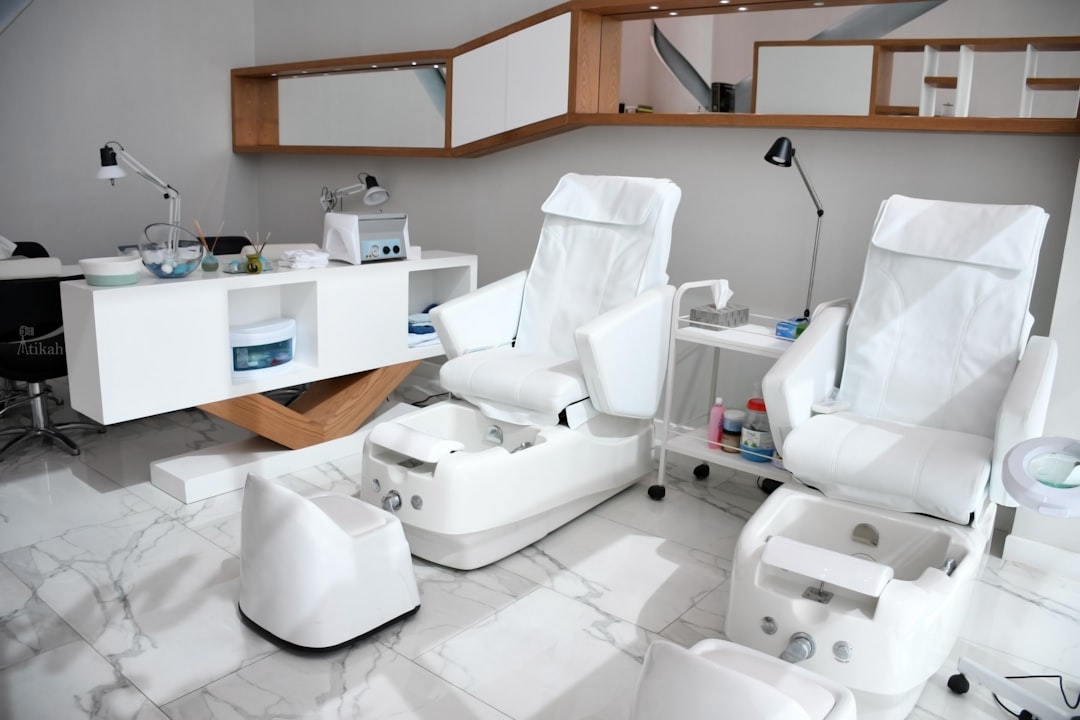
- Streamlined Rooming and Exam Processes: Ensure exam rooms are identical and appropriately supplied to avoid wasted time searching for instruments. Consider positioning podiatry chairs at an angle for easier caregiver access to the foot area, enhancing efficiency during procedures.
- Staff Roles and Cross-Training: A well-trained and empowered team is central to practice growth. Encourage cross-training among staff members, allowing for flexibility and ensuring that tasks can be covered during absences. Regular team meetings can help align goals and improve collaboration, ensuring everyone understands their role in maintaining an efficient patient flow.
- Maximizing Value-Added Time (VAT): This refers to the time a patient spends actively receiving care from a clinician. By reducing non-value-added time (NVAT) like waiting or administrative tasks, we free up more time for quality patient-provider interactions. Optimizing cycle time to allow for just one additional patient per day can equate to an impressive $20,000 to $40,000 per year in profit for your practice.
Creating efficient and seamless experiences for your podiatry patients is not just about speed; it’s about thoughtful design and process improvement. For more on this, explore the insights provided by Creating Efficient and Seamless Experiences for Podiatry Patients. We also offer solutions for Quality Management to ensure your efficiency gains translate into higher quality care.
Post-Visit: Closing the Loop on Care and Revenue
The patient journey doesn’t end when they leave your office. The post-visit phase is critical for ensuring continuity of care, patient retention, and securing your practice’s financial health.
- Streamlined Patient Checkout: The checkout process should be as smooth as possible. This includes efficient payment collection, scheduling follow-up appointments, and providing clear care instructions.
- Follow-Up Appointment Scheduling: Proactively scheduling the next visit before the patient leaves improves retention and ensures continuity of care, which is particularly important for chronic conditions or post-operative recovery common in podiatry.
- Patient Education Materials: Provide patients with clear, concise, and easy-to-understand educational materials related to their diagnosis, treatment plan, and home care. This empowers patients, improves compliance, and reduces calls to your office with common questions.
- Accurate Billing and Coding: This is where your practice’s financial health is truly cemented. Accurate and timely billing, precise coding for all services rendered, and efficient claims submission are non-negotiable. Errors here can lead to delayed payments, denied claims, and significant revenue loss. This is an area where specialized expertise, like ours at Guide Podiatric Billing Services, can make a profound difference, ensuring your claims are clean and your revenue cycle is optimized.
For an in-depth understanding of how to protect your practice’s finances, dig into The Footwork of Finance: Mastering Podiatry Billing Compliance.
Leveraging Technology to Streamline Your Practice
In today’s healthcare landscape, technology is not just an advantage—it’s a necessity for effective podiatry workflow optimization. From managing patient records to automating administrative tasks, the right technological tools can transform your practice, allowing your team to focus more on patient care and less on paperwork.
The Digital Backbone: Podiatry-Specific EHR and Practice Management Software
The foundation of any modern, efficient podiatry practice is a robust Electronic Health Record (EHR) system, often integrated with practice management software.
Specialized vs. General EHRs: While general EHRs exist, a podiatry-specific EHR is a game-changer. Why? Because it’s designed with your unique needs in mind. A general EHR simply can’t offer the same level of custom functionality. A podiatry-specific EHR includes features custom to the specialty, such as foot and ankle diagrams for quick annotation, templates for common conditions like plantar fasciitis or diabetic foot exams, and built-in billing codes for podiatric procedures, which a general EHR lacks. This specialization significantly speeds up documentation and ensures accuracy.
Key Features to Look For: When evaluating practice management software or EHRs for your podiatry practice, consider these essential features:
- Efficient Appointment Management: Custom to handle the high volume and varying treatment durations common in podiatry.
- Comprehensive Patient Medical Records: Quick access to detailed patient history for personalized treatment plans.
- Paperless Solutions: Online intake forms, consent forms, and digital document management improve efficiency and reduce clutter.
- Streamlined Billing and Invoicing: Effortless invoice creation, tracking accounts receivable, and integration with payment processors.
- Secure Payment Processing: Protects patient data and simplifies transactions.
- Insurance Claim Management: Including automated form completion (like HCFA 1500) and scrubbing claims to optimize clean claim rates.
- Robust Reporting Capabilities: For tracking practice performance and identifying areas for improvement.
- Podiatry-Specific Templates: Customizable foot and ankle exam templates, built-in e-prescribing, and diagnostic imaging integration.
- E-prescribing: For accuracy, safety, and efficiency in medication orders, including controlled substances.
- Diagnostic Imaging Integration: Seamlessly order X-rays, bone scans, and MRIs and receive results directly into the EHR from web or iPad.
Benefits of a Paperless Practice: Implementing a paperless system is a cornerstone of podiatry workflow optimization. It offers numerous advantages: increased efficiency, better data security through access controls and encryption, reduced physical storage needs, and easier access to patient information from anywhere.
For more information on integrating software into your practice, visit our Software Integration page. If you’re considering a transition, our guide on Navigating Your Transition from TrakNet: Find Your Perfect EHR Match with Beacon can help.
Automating the Administrative Burden for Better Podiatry Workflow Optimization
Automation and Artificial Intelligence (AI) are rapidly advancing, offering powerful tools to reduce administrative tasks and maximize time with patients.
- AI for Documentation: Imagine your EHR system learning your documentation habits or generating draft notes from patient encounters. AI tools can predict clinician actions for inbox items, facilitate dictation, or even use AI-powered voice navigation, significantly cutting down on documentation time and allowing you to focus on the patient in front of you.
- Automated Patient Communication: Beyond appointment reminders, automation can handle post-visit follow-ups, patient education pushes, and even feedback requests, ensuring continuous engagement without manual effort.
- Digital Check-in Kiosks: These self-service options streamline the patient arrival process, allowing patients to check in, verify insurance, and make payments independently. One healthcare organization found that implementing digital check-in freed up staff time to run reports essential for managing value-based contracts.
- Self-Scheduling Benefits: As mentioned earlier, self-scheduling isn’t just a convenience for patients; it’s a powerful tool for your practice. It efficiently fills your schedule and has been shown to lead to fewer no-shows.
By embracing these technologies, we can transform routine administrative burdens into streamlined, automated processes, allowing your team to dedicate their energy to what matters most: providing exceptional patient care. Explore more about how technology is shaping our field on our Technology in Podiatry page.
Designing for Efficiency: The Physical Space and Staff
An optimized workflow isn’t just about software; it’s also about the physical environment of your practice and the people who work within it. Thoughtful design and empowered staff are crucial for creating a smooth, efficient, and safe patient experience.
The High-Performance Podiatry Exam Room
The design of your exam and procedure rooms significantly impacts efficiency, infection control, and patient comfort. Think of your clinic’s layout as another tool in your podiatry workflow optimization arsenal.
- Room Zones: Separate public/family zones from procedure zones within the exam room. This prevents family members or visitors from inadvertently interfering with caregiver movement during procedures, maintaining efficiency and safety.
- Ergonomic Chair Positioning: Position the podiatry chair at an angle. This provides more effortless access to the foot area for the caregiver, reducing strain and improving the flow of procedures. Investing in height-adjustable podiatry chairs also decreases the need for manual lifting and repositioning of patients, enhancing both staff and patient safety.
- Organized Storage Solutions: Streamlined and well-organized storage is crucial. Use under-countertop storage for instrument carts when not in use, keeping them out of the way but easily accessible. Incorporate instrument trays directly on the procedure chair for immediate access to tools and devices during a patient visit.
- ADA Compliance: Accessibility is not just a legal requirement but a commitment to all patients. Ensure adequate space for wheelchair turning (e.g., a 60-inch turning radius) and clear patient egress routes within the exam room.
- Infection Prevention Design: This is paramount in any medical setting. Choose materials with seamless upholstery, sealed controls, and solid surfaces that are easy to clean and disinfect. Seamless door/drawer cabinetry and tub-style drawers further simplify cleaning protocols, minimizing the risk of infection. Consider self-rooming workflows to minimize patient and staff exposure to contagions where appropriate.
Here are essential features for an efficient podiatry exam room:
- Function, efficiency, and versatility in design.
- Separation of public/family and procedure zones to prevent interference.
- Strategic placement of instruments and supplies to maintain a short reach zone for caregivers.
- Materials and design features that prioritize ease of cleaning and infection control.
- Accessibility features, including ADA compliance and height-adjustable chairs.
- Integrated technology like Real-Time Locating Systems (RTLS) for patient flow optimization and contact tracing, if your practice has the resources.
Empowering Your Team Through Training and Clear Roles
Your staff are the backbone of your practice. Investing in their development and ensuring clear roles are vital for podiatry workflow optimization.
- Onboarding and Continuous Training: A well-trained team is central to practice growth. Provide thorough onboarding for new hires and continuous training for all staff on new technologies (like EHR updates), clinical procedures, customer service best practices, and billing processes.
- Cross-Training for Flexibility: Encourage staff to learn multiple roles within the practice. This cross-training creates a flexible team that can adapt to changing patient volumes or staff absences, preventing bottlenecks and maintaining smooth operations.
- Defining Roles and Responsibilities: Clearly define job descriptions and responsibilities for each team member. This reduces confusion, minimizes duplicated efforts, and ensures accountability, fostering a more efficient and harmonious work environment.
- Fostering a Cohesive Team Culture: Hold regular team meetings to discuss goals, share feedback, and improve communication. An engaged and cohesive team is more productive, provides better patient care, and contributes to a positive practice atmosphere.
Data, Compliance, and Continuous Improvement
The final pieces of the podiatry workflow optimization puzzle involve leveraging data to make informed decisions, ensuring strict adherence to regulations, and fostering a culture of continuous improvement.
Using Data Analytics for Continuous Podiatry Workflow Optimization
Data is a powerful tool for identifying inefficiencies and driving positive change. By regularly collecting and analyzing key performance indicators (KPIs), we can pinpoint exactly where our workflows need attention.
- Identifying Bottlenecks: Data analytics can reveal where patients spend too much time waiting or where administrative tasks slow down the entire process. For instance, sophisticated EHRs can track patient wait times, highlighting pitfalls and gaps in your current workflow.
- Tracking KPIs: Regularly review financial metrics like net collections rate, days in accounts receivable (A/R), and patient acquisition cost. Beyond financial metrics, track operational KPIs such as:
- Cycle Time: Our goal is often to decrease office visit cycle time to 30-35 minutes, balancing efficiency with quality care.
- Patient Wait Times: Monitor and aim to reduce the time patients spend waiting for appointments or procedures.
- No-Show Rates: Track and analyze reasons for no-shows to implement targeted solutions.
- Patient Satisfaction Surveys: Gather feedback directly from your patients. Their insights are invaluable for identifying areas where the patient experience can be improved, which in turn contributes to retention and positive referrals.
- Driving Improvement: Use the insights from your data to implement targeted changes. For example, if data shows consistent delays at check-in, you might invest further in digital intake or pre-verification processes. This iterative process of measurement, analysis, and adjustment is key to continuous podiatry workflow optimization.
While our focus here is on workflow, the power of data extends to clinical outcomes as well. The professional impact of audit tools, like those used to improve foot and ankle surgery outcomes, demonstrates how data-driven approaches improve overall practice quality. You can learn more about this by reviewing Improving the outcomes of foot and ankle surgery. For a deeper dive into financial health, check out Live and Die by KPIs: The Podiatrist’s Guide to Practice Growth and Profitability.
Integrating Compliance into Your Daily Operations
Compliance isn’t just about avoiding penalties; it’s about building trust, protecting patient data, and ensuring ethical practice. Effective podiatry workflow optimization inherently includes compliance.
- HIPAA Regulations: Protecting patient health information (PHI) is non-negotiable. Your workflows must ensure patient privacy and data security at every touchpoint, from scheduling to billing and record-keeping.
- MIPS/MACRA Reporting: For practices participating in Medicare, meeting Merit-based Incentive Payment System (MIPS) requirements (under MACRA) is critical for reimbursement and avoiding penalties. Your EHR and practice management systems should facilitate easy tracking and reporting of quality measures.
- OSHA Standards: Maintaining a safe environment for both patients and staff is essential. Workflows should incorporate protocols for infection control, equipment sterilization, and hazard communication to comply with OSHA guidelines.
- Building Compliance into Workflows: The best way to ensure compliance is to integrate it directly into your daily operations. This means regular internal audits, detailed documentation, and staying current on regulatory changes. For example, ensuring proper coding for common podiatric procedures, such as toenail removal or wound care, and using podiatry-specific ICD-10 codes, reduces the likelihood of claim denials and improves revenue cycle efficiency.
Proactive compliance protects your practice and reinforces your commitment to ethical, high-quality care. To help audit-proof your practice, explore our guide on Audit-Proof Your Practice: A Guide to Podiatry Billing Compliance. We also have a dedicated section for Compliance & Legal resources.
Frequently Asked Questions about Podiatry Workflow Optimization
What are the primary goals of optimizing a podiatry workflow?
Beyond just efficiency, the primary goals of podiatry workflow optimization are to improve the quality of patient care, improve patient satisfaction and retention, increase practice revenue and profitability, and reduce administrative burden and burnout for staff. It’s about creating a sustainable, thriving practice where everyone benefits.
What’s the difference between a general EHR and a podiatry-specific one?
The key difference lies in specialization. A podiatry-specific EHR includes features custom to the specialty, such as foot and ankle diagrams, templates for common conditions like plantar fasciitis or diabetic foot exams, and built-in billing codes for podiatric procedures. These custom tools are designed to streamline documentation and billing for podiatrists, which a general EHR typically lacks, making the specialized system far more efficient and accurate for your practice.
How can a small practice start optimizing its workflow without a huge budget?
Starting small and smart is key! Begin with low-cost, high-impact changes:
- Standardize exam room setups: Ensure supplies are always in the same place.
- Cross-train staff: Allow team members to cover front and back-office tasks for flexibility.
- Analyze patient flow: Walk through your practice as a patient would, timing each step to identify simple bottlenecks.
- Implement clear communication protocols: Reduce interruptions and improve internal coordination.
- Strategically invest: Once you’ve made these initial improvements, consider affordable technology like a basic practice management system for scheduling and reminders, or a patient portal for digital intake forms. Even small practices can achieve significant podiatry workflow optimization with thoughtful planning.
Conclusion: From Optimized Workflow to a Thriving Practice
Changing your practice from chaos to clarity through podiatry workflow optimization is an ongoing journey, not a destination. It requires a holistic approach that integrates technology, thoughtful physical space design, empowered staff training, and data-driven decision-making. By focusing on these pillars, you create a practice that not only runs smoothly but also delivers exceptional patient care, fosters a positive environment for your team, and achieves sustainable growth.
The benefits are clear: better patient outcomes, higher revenue, and improved staff morale. While optimizing clinical and administrative workflows is key, ensuring your revenue cycle is equally efficient is crucial. Expert partners like Guide Podiatric Billing Services can manage the complexities of billing and revenue cycle management—from accurate coding to claims submission and denial management—allowing you to focus on what you do best: providing outstanding foot and ankle care to your patients in Jersey City NJ, Succasunna NJ, Las Vegas NV, Omaha NE, Charlotte North Carolina, Ashland Kentucky, and across the USA.
Ready to take the next step towards a truly optimized practice? Learn how specialized billing services can complete your optimized workflow.