

Podiatric Practice Management: Mastering 4 Pillars
Why Podiatric Practice Management Matters More Than Ever
Podiatric practice management is the strategic oversight of all business operations in a podiatry practice—from billing and coding to staff management, compliance, and patient engagement. It’s what transforms a clinical practice into a thriving, profitable business.
Key components of effective podiatric practice management include:
- Financial Health: Managing revenue cycles, tracking KPIs, and optimizing reimbursements
- Operational Efficiency: Streamlining scheduling, inventory, and workflow processes
- Regulatory Compliance: Adhering to HIPAA, Medicare regulations, and proper coding standards
- Technology Integration: Leveraging EHR systems and practice management software
- Patient Experience: Building strong communication and engagement strategies
- Strategic Growth: Marketing, online reputation, and practice development
You became a podiatrist to heal patients, not to wrestle with denied claims or decode Medicare regulations. Yet here’s the reality: insufficient documentation accounts for 76.4% of improper payments for podiatric providers, with an improper payment rate of 11.2% totaling $216.9 million annually.
Every hour spent on billing headaches is an hour stolen from patient care. Every denied claim chips away at your practice’s profitability. And every compliance misstep puts your entire operation at risk.
The good news? You don’t have to become a billing expert or business school graduate to run a successful practice. You just need to understand the core pillars that support practice health—and know when to partner with specialists who can handle the complex details.
This guide breaks down everything you need to master the business side of podiatry. From financial management and compliance strategies to technology adoption and patient engagement, we’ll show you how to build a practice that’s both clinically excellent and financially sound.
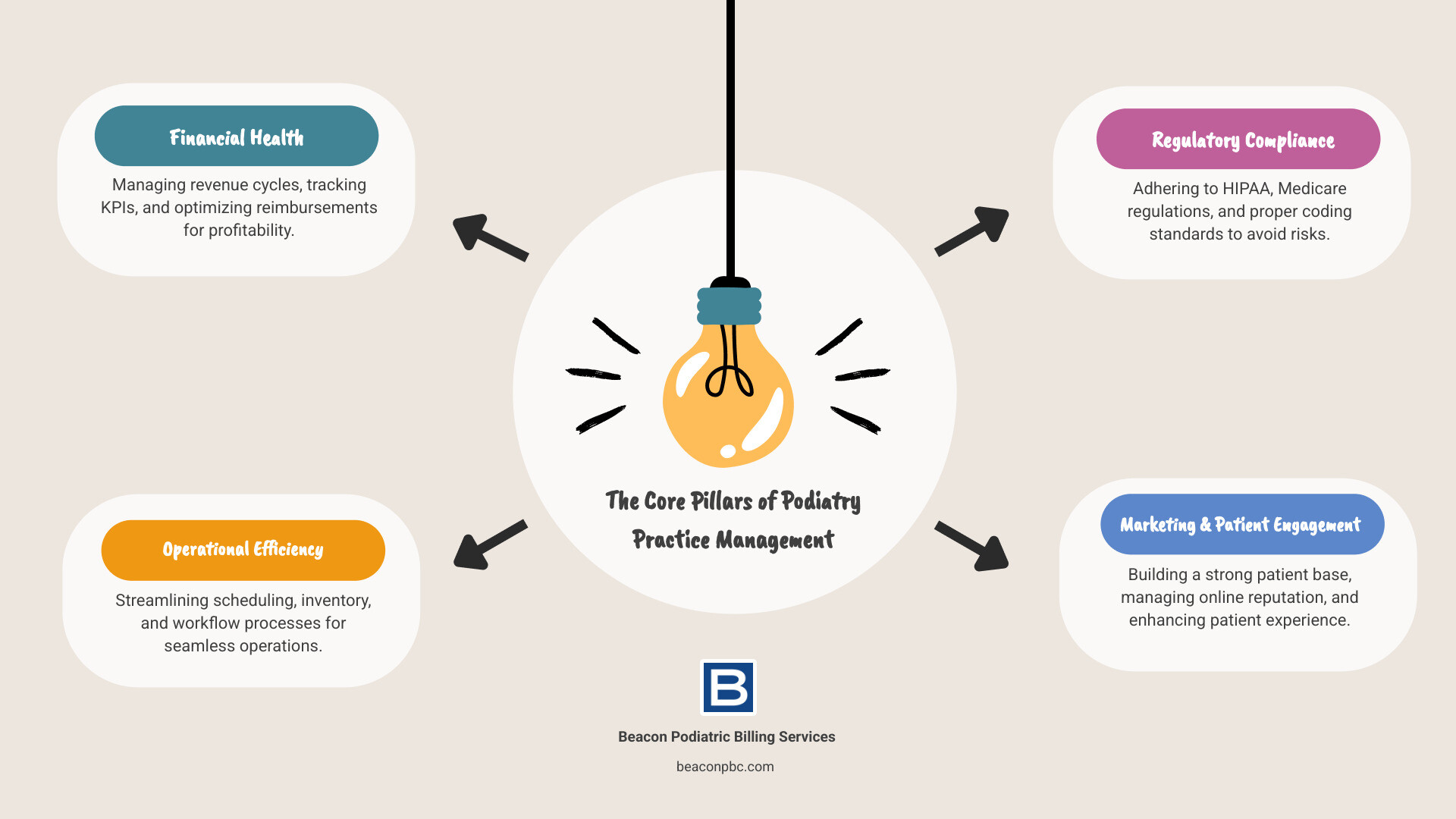
The Core Pillars of Operational and Financial Health
Running a podiatry practice successfully means balancing exceptional patient care with robust business operations. Think of it like a finely tuned machine: every gear needs to mesh perfectly for optimal performance. Our goal is to help you achieve operational efficiency, financial stability, and high staff productivity, all while ensuring patient satisfaction.

Foundational Elements of Podiatric Practice Management
The primary challenge for many podiatry practices isn’t clinical—it’s business management. From managing business insurance to navigating complex legal landscapes, podiatrists often find themselves wearing many hats. We understand that your passion is patient care, but the health of your practice hinges on sound management.
One fundamental decision that shapes your practice’s operational and financial structure is the practice model. Podiatrists can choose between various models, each with its own advantages and disadvantages.
| Practice Model | Pros | Cons |
|---|---|---|
| Solo Practice | – Complete autonomy over clinical and business decisions – Keep 100% of the profits – Build a strong personal brand and patient loyalty |
– High personal financial risk and overhead – Responsible for all administrative tasks – Difficult to take time off; limited call coverage |
| Group Practice | – Shared overhead costs and resources – Collaborative environment and built-in referral source – Better work-life balance with shared call coverage |
– Less individual autonomy; decisions made by committee – Potential for personality or management conflicts – Profits are shared among partners |
| Hospital Employment | – Stable salary, benefits, and retirement plans – No administrative or billing headaches – Access to a large, established patient base |
– Lack of control over practice operations and scheduling – Earning potential may be capped – Subject to hospital bureaucracy and policies |
The American Academy of Podiatric Practice Management (AAPPM) has been helping podiatrists lift their practices since 1961, offering resources to help you become a better, more profitable practitioner. You can learn more about them at the AAPPM website.
Financial Management and Revenue Cycle Integrity
Now, let’s talk about the money—the lifeblood of your practice. Effective financial management isn’t just about paying the bills; it’s about optimizing every dollar that flows in and out. This includes carefully managing fee schedules, diligently tracking expenses, and, most critically, mastering revenue cycle management (RCM).
The goal is to maximize reimbursements and minimize denials. Why does this matter so much? Because the improper payment rate for podiatry care is 11.2%, with a projected improper payment amount of $216.9 million. And guess what’s causing most of that bleed? Insufficient documentation, accounting for a staggering 76.4% of improper payments, followed by incorrect coding at 11.5%. This means millions of dollars are left on the table simply due to preventable errors.
To understand your financial pulse, you need to monitor Key Performance Indicators (KPIs). These aren’t just fancy acronyms; they’re vital signs for your practice’s financial health. Essential KPIs include:
- Net Collection Ratio: This shows how much of your collectible revenue you actually collect. A low ratio indicates money being left behind.
- Days Sales Outstanding (DSO): How long does it take for your practice to collect payments after a service? A high DSO means delayed cash flow.
- Aged Accounts Receivable (A/R) Analysis: This helps you identify claims that are stuck in the system and need immediate attention. The longer a claim ages, the harder it is to collect.
By regularly tracking these metrics, you gain deep insights into your practice’s performance, allowing for informed financial decisions. It’s about being proactive, not reactive, when it comes to your money. For a deeper dive into these vital metrics, explore our guide on Live and Die by KPIs: The Podiatrist’s Guide to Practice Growth and Profitability and other Financial Health KPIs.
Efficient Operations and Staff Management
Beyond the numbers, the smooth daily flow of your practice is paramount. This means optimizing everything from patient scheduling to inventory.
Appointment scheduling optimization is your first line of defense against lost revenue and frustrated patients. Use advanced scheduling tools to minimize patient wait times and reduce no-shows. Implement patient-friendly cancellation policies and automated reminders via email or SMS to fill last-minute slots.
Inventory management best practices are crucial for controlling costs. Keep track of frequently used supplies and equipment, set minimum inventory levels to avoid stockouts, and consider inventory management software to automate reordering processes. This ensures you always have what you need, without overstocking. For example, our partners at Talar Medical, a group purchasing organization, can provide cost savings to even the smallest podiatry practice by giving their members access to better rates with vendors.

Procurement strategies involve smart purchasing. Leveraging Group Purchasing Organizations (GPOs) can give you access to better rates with vendors, saving your practice significant money on essential products and services.
Finally, your team is your greatest asset. Staff training and development are essential for a thriving practice. Provide regular training sessions on podiatry procedures, patient communication, and compliance updates. Clearly defining roles and responsibilities ensures everyone knows their part, preventing overlap and enhancing efficiency. Most importantly, fostering a positive team culture leads to higher morale, lower turnover, and ultimately, better patient care. A motivated staff is a productive staff, and happy staff means happy patients.
Mastering Podiatry Billing, Coding, and Compliance
This is where many practices stumble, and it’s precisely where we shine. The complexities of podiatry billing and coding, coupled with ever-changing regulations, can feel like a minefield. The statistics don’t lie: improper payment rates are high, denials are common, and the cost of non-compliance can be devastating.
Navigating Complex Podiatry Billing and Coding
Podiatry faces unique billing and coding challenges. Your specialty has specific coding requirements for procedures like routine foot care, orthotics, and debridement of nails. These aren’t always straightforward, and misinterpretations can lead to denied claims.
For instance, routine foot care is generally not covered by Medicare Part B unless specific exceptions apply. You need meticulous documentation to support medical necessity, especially for systemic conditions like diabetes or peripheral vascular disease that may justify coverage. Understanding the nuances of Class A, B, and C findings that can create a presumption of coverage for routine foot care is critical. Incorrect coding alone accounted for 11.5% of improper payments for podiatric providers.
To get paid what you’re owed, you need to:
- Understand specialized coding requirements: CPT and ICD codes specific to podiatry.
- Master documentation: Clearly support the medical necessity of every service.
- Stay updated: Fee schedules and coding guidelines change annually.
We’ve dedicated resources to help you, including our detailed Medicare Podiatry Billing Guidelines and the Podiatry Care compliance tips from CMS.
The Benefits of Partnering with a Podiatric Revenue Cycle Management Expert
Given the intricacies, many podiatrists find immense value in partnering with a specialized revenue cycle management (RCM) expert. Why? Because it directly impacts your bottom line and allows you to focus on what you do best: patient care.
Our specialized, 100% US-based team understands the unique complexities of podiatry billing. When you partner with us, you gain:
- Maximized Reimbursements: Our podiatry-specific expertise ensures claims are coded accurately and submitted correctly the first time, reducing rejections and appeals. We aim for a nearly 100% success rate on first-attempt clearinghouse submissions.
- Minimized Claim Denials: We implement proactive denial prevention strategies, including eligibility verifications, out-of-network alerts, and automated prior authorizations. Should a denial occur, our denial management team acts swiftly.
- Improved Efficiency: We streamline billing processes, freeing up your staff to focus on patient care and other essential practice operations.
- Cost-Effectiveness: Outsourcing billing can often be more cost-effective than maintaining an in-house billing department, eliminating overhead costs associated with staff, training, and specialized software.
- Focusing on Patient Care: With billing off your plate, you and your team can dedicate more time and energy to providing excellent care, enhancing the patient experience.
- Access to Specialized Expertise: We stay updated on the latest coding changes, compliance regulations, and payer policies, so you don’t have to.
Want to see how we can transform your practice’s financial health? Explore our Billing Services.
Building a Bulletproof Compliance Strategy
Compliance isn’t just a suggestion; it’s a legal imperative. A robust compliance strategy protects your practice from audits, penalties, and reputational damage. Key areas include:
- HIPAA Privacy and Security: Protecting patient health information (PHI) is non-negotiable. Ensure your practice has strict protocols for data handling, storage, and transmission.
- Stark Law: Understand regulations concerning physician self-referrals to avoid conflicts of interest.
- Medicare Regulations: Beyond billing, comply with Medicare Conditions of Participation and other evolving policies.
- State-Specific Laws: Stay current on laws pertinent to podiatric practice in New Jersey, Nevada, North Carolina, and Kentucky, as these can vary significantly.
- Hospital Privileging and Credentialing: Ensure all podiatrists and Advanced Practice Providers (APPs) in your practice maintain proper hospital privileges and credentialing to avoid service disruptions and legal issues.
Implementing a “Culture of Compliance” is key. This means integrating compliance into every aspect of your practice, from hiring to daily operations. Our partners at TLD Systems can assist your practice with risk analysis and help you build this essential culture.
Leveraging Technology and Innovation for Practice Growth
The healthcare landscape is constantly evolving, and technology is at the forefront of this change. Adapting to these changes isn’t just about keeping up; it’s about improving patient care, gaining a competitive edge, and future-proofing your practice. We believe that technology, when strategically implemented, can open up new levels of efficiency and growth. Explore more about Technology in Podiatry.
The Role of EHR and Practice Management Software
Electronic Health Records (EHR) and practice management software are no longer luxuries; they are necessities for modern podiatric practices. These integrated systems streamline workflows and centralize patient information, making your practice run smoother than a well-oiled machine.
Look for solutions with:
- Podiatry-specific documentation templates: These save time and ensure comprehensive charting for conditions like bunions, diabetic foot care, plantar fasciitis, and wound management.
- Imaging integration: Seamlessly store, retrieve, and collaborate on diagnostic images directly within the EHR.
- Data accuracy: Reduce errors and improve the quality of patient records.
- Voice navigation: Features like Medics FlowText allow for automated voice-to-text-to-data entry, enhancing efficiency.
If you’re considering a transition or looking for a better fit, our guide on Navigating Your Transition from TrakNet: Find Your Perfect EHR Match with Beacon can help you identify the best EHR for your needs.
Adapting to Evolving Healthcare Trends
The healthcare industry is dynamic, with new trends constantly emerging. Podiatry practices must adapt to remain relevant and profitable.
-
Telemedicine Adoption: Telemedicine has proven to be a vital tool, expanding your reach, reducing no-shows, and improving patient convenience. It’s excellent for follow-up consultations, reviewing test results, and even pre-appointment triage. For further insights, check out this trusted resource on telemedicine adoption.
-
Value-Based Care Models: The shift from fee-for-service to value-based care is ongoing. This means focusing on patient outcomes and quality of care. The Merit-based Incentive Payment System (MIPS) is a key component, with penalties of up to 9% for lack of reporting. Integrated software can cull MIPS data without extra steps, and experts can assist with compliance.
- Remote Patient Monitoring (RPM): RPM allows you to monitor patients’ conditions remotely, improving care coordination and potentially generating new revenue streams, especially for chronic conditions like diabetic foot care.
Embracing these technologies and trends allows your practice to not only adapt but thrive in the modern healthcare environment.
Strategic Marketing and Patient Engagement
In today’s competitive landscape, simply being an excellent podiatrist isn’t enough. You need to actively promote your practice, engage with your patients, and cultivate a sterling online reputation. After all, if patients can’t find you or feel connected to your practice, your clinical excellence might go unnoticed.
Promoting Your Practice and Building an Online Reputation
Building a strong online presence is essential for attracting new patients and retaining existing ones.
- Digital Marketing Essentials: This includes having a professional, mobile-friendly website, utilizing local SEO strategies to ensure your practice appears in local search results (e.g., “podiatrist Jersey City NJ”), and running targeted online ad campaigns.
- Managing Patient Reviews: Online reviews are powerful. Actively encourage satisfied patients to leave reviews and promptly address any negative feedback constructively and professionally. Most rating sites are stacked against healthcare providers, so proactively managing your reputation is key.
- Social Media Engagement: Use platforms like Facebook or Instagram to share educational content, practice updates, and build a community around your brand.
Our partners at Tebra specialize in helping practices promote themselves online, attract new patients, and retain them for life. For more guidance on growing your practice, explore our Practice Management & Growth resources.
Enhancing the Patient Experience
A positive patient experience is your best marketing tool. Happy patients become loyal patients and powerful referrers.
- Patient Communication Best Practices: Clear, empathetic, and timely communication builds trust. This includes explaining diagnoses and treatment plans thoroughly and ensuring patients feel heard.
- Automated Appointment Reminders: These reduce no-shows and show patients you value their time.
- Online Patient Portals: Offer portals for patients to schedule appointments, access records, pay bills, and communicate securely with your team. This makes your practice available 24/7.
- Providing Educational Materials: Empower patients with knowledge about their conditions and treatment options. This can be done through brochures, website content, or in-office videos.
- Building Trust and Loyalty: By consistently delivering excellent care and a seamless patient experience, you foster long-term relationships.
Essential Resources for Effective Podiatric Practice Management
No practice is an island. To truly thrive, you need to leverage external resources, form strategic partnerships, and commit to continuous learning.
Key Partnerships for Profitability and Savings
Smart partnerships can significantly impact your practice’s profitability and operational efficiency.
- Group Purchasing Organizations (GPOs): As mentioned earlier, GPOs like Talar Medical can provide cost savings on even the smallest podiatry practice’s supplies and services by giving access to better vendor rates.
- Innovative Payment Processing: Modern payment solutions can improve your bottom line by streamlining transactions and offering convenient options for patients. Our partners at Streamline Payments offer innovative payment processing solutions with personal service and support.
- Professional Associations: Organizations like the American Podiatric Medical Association (APMA) offer a wealth of resources for their members, including coding, reimbursement, compliance, and marketing tools. The APMA’s Practice Management section is a great starting point for many of these needs.
We’re always here to help you steer these partnerships. Learn more about cost savings with Beacon partners.
The Importance of Continuing Professional Development
The world of medicine, and specifically podiatry, never stands still.
- Role of Continuing Medical Education (CME): CME is not just a requirement; it’s an opportunity for professional growth. It keeps you updated on the latest clinical advancements, treatment protocols, and even practice management techniques. CME Online is an excellent resource for hundreds of podiatry-specific educational programs, accredited by CPME.
- Business Management Courses: Consider courses or workshops focused on healthcare business. These can sharpen your skills in financial planning, human resources, and strategic planning.
- Staying Current on Regulations: Regularly attend workshops and webinars on regulatory updates to ensure your practice remains compliant. This is crucial for avoiding penalties and maintaining your license in states like New Jersey, Nevada, North Carolina, and Kentucky.
Investing in your own and your staff’s continuous learning is an investment in the long-term success of your podiatry practice. For more insights, browse our Articles section.
Frequently Asked Questions about Podiatry Practice Management
What is the biggest management challenge for a new podiatry practice?
For a new podiatry practice, the biggest management challenge often lies in simultaneously establishing patient flow, navigating complex billing and reimbursement processes, and managing initial financial planning. Many new practitioners focus heavily on clinical skills, but the business side—from setting up fee schedules to hiring and training staff—can be overwhelming. The initial phase involves substantial administrative burden, from obtaining hospital privileges and credentialing to ensuring compliance from day one. Without a clear strategy for revenue cycle management, a new practice can quickly face cash flow issues due to delayed or denied claims.
How can I reduce claim denials for routine foot care?
Reducing claim denials for routine foot care, especially with Medicare, requires meticulous attention to documentation and a thorough understanding of guidelines. Routine foot care is generally not covered unless specific exceptions apply. You must document medical necessity clearly, often linked to systemic conditions such as diabetes, peripheral vascular disease, or certain neuropathies that make routine care hazardous if performed by a non-professional. Furthermore, identifying and documenting specific clinical findings (like Class A, B, or C findings—e.g., absent pulses, trophic changes, or claudication) can help support a presumption of coverage. Always ensure the patient is under active care of an MD/DO for the complicating systemic disease and that this is documented. Adhering to our Medicare Podiatry Billing Guidelines is crucial.
Is partnering with a podiatric billing expert worth the cost?
Absolutely. Partnering with a podiatric billing expert is a strategic investment that can yield significant returns. While there is a cost involved, the benefits often far outweigh it. A specialized expert, like our team at Guide Podiatric Billing Services, offers:
- Increased Collections: Our podiatry-specific expertise leads to higher clean claim rates and maximized reimbursements, often increasing revenue by up to 20% in a short period.
- Reduced Administrative Burden: Your staff is freed from complex billing tasks, allowing them to focus on patient care and in-office operations.
- Compliance Expertise: We stay updated on ever-changing coding and regulatory guidelines, minimizing your risk of audits and penalties.
- Improved Cash Flow: Faster, more accurate claims processing means quicker payments.
- Focus on Core Competencies: You get to be a doctor, and we handle the billing complexities.
Consider a cost-benefit analysis. What is the actual cost of your in-house billing errors, denied claims, delayed payments, and the time your team spends on these issues? For many practices, the efficiency and revenue gains from partnering with an expert far surpass the fees, making it a highly worthwhile decision.
Conclusion
Mastering podiatric practice management is about embracing a business-centric mindset without losing sight of your core mission: patient care. From optimizing your financial health and streamlining operations to ensuring robust compliance and leveraging cutting-edge technology, every pillar supports a thriving, successful practice.
The journey to a truly efficient and profitable practice involves continuous improvement, proactive management, and recognizing when to seek expert help. You don’t have to steer the complexities of billing, coding, and revenue cycle management alone.
Let Guide Podiatric Billing Services be your RCM partner. Our 100% US-based team specializes in podiatry, ensuring your claims are processed with precision, your reimbursements are maximized, and your practice’s financial health is robust. This frees you to focus on what you do best—providing exceptional foot and ankle care to your patients in New Jersey, Nevada, North Carolina, and Kentucky.
Ready to transform your practice’s financial future? Contact Beacon to optimize your billing services today.