

Podiatry Practice Growth: 1 Blueprint to Thrive 2026
Why Podiatry Practice Growth Matters Now More Than Ever
Podiatry practice growth isn’t just about seeing more patients—it’s about building a sustainable, profitable practice that serves your community while supporting your lifestyle. The United States Podiatry Services Market reached $972.5 million in 2022 and is projected to grow to $1,184 million by 2027. Yet many podiatrists are struggling to capture their share of this expanding market.
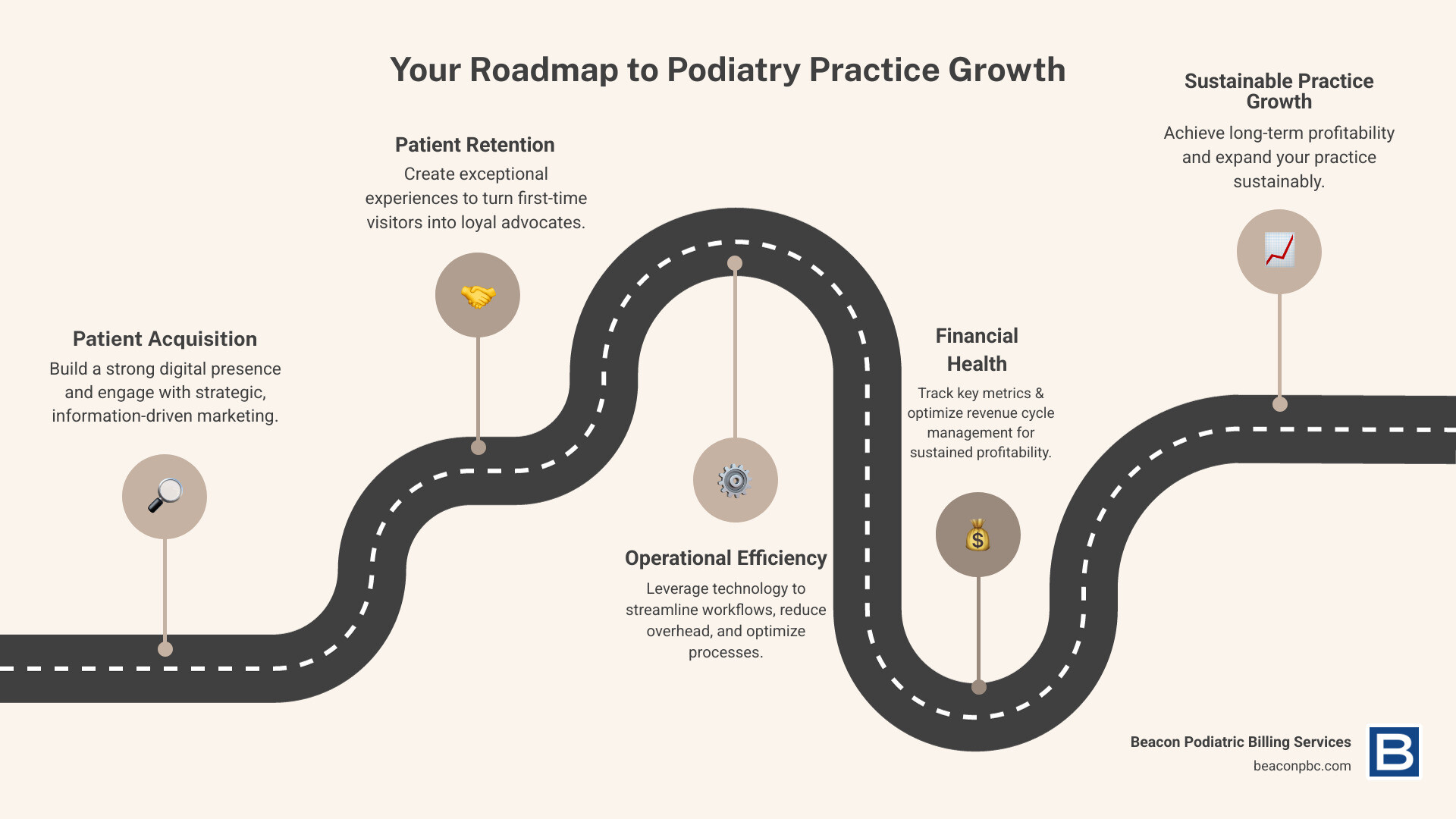
Here’s what successful podiatry practice growth requires:
- Patient Acquisition – Building a strong digital presence and meeting patients where they search
- Patient Retention – Creating exceptional experiences that turn first-time visitors into loyal advocates
- Operational Efficiency – Leveraging technology to streamline workflows and reduce overhead
- Financial Health – Tracking the right metrics and optimizing revenue cycle management
- Strategic Marketing – Moving beyond outdated tactics to information-driven patient engagement
The reality is stark: podiatry physician practice revenues have decreased by an average of 55 percent since 2022. Meanwhile, 68% of patients are more likely to choose providers who offer online booking, and 90% use online reviews to evaluate physicians before making their first appointment.
The gap between traditional practice management and modern patient expectations has never been wider.
You didn’t go to medical school to become a marketing expert or financial analyst. But in today’s competitive landscape, understanding the fundamentals of practice growth is essential. The good news? You don’t need unlimited funds or a marketing degree. You need a clear roadmap that addresses every aspect of sustainable growth—from attracting the right patients to optimizing your revenue cycle.
This guide breaks down the proven strategies that successful podiatry practices use to thrive. Whether you’re struggling with patient acquisition, dealing with complex billing challenges, or simply trying to grow without burning out, you’ll find actionable solutions backed by real data and industry best practices.
Shifting from Outdated Tactics to Modern Patient Engagement
Many podiatrists find themselves frustrated with their marketing efforts, often experiencing high costs and low returns. This frustration often stems from relying on traditional marketing methods that are simply ineffective in today’s information-saturated world. To achieve real podiatry practice growth, we must shift our approach from telling people why we’re the best to showing them how we can solve their problems.

Why Traditional Podiatry Marketing Fails
Traditional marketing often relies on interruption-based advertising. Think about it: print ads in local newspapers, expensive billboards along busy highways, or radio spots. While these once held sway, their effectiveness has significantly diminished. For instance, a billboard in a mid-sized city with decent traffic could cost between $18,000-$30,000 for six months. This is a substantial investment for simply trying to create awareness, and often lacks direct targeting or measurable conversion.
The core issue is that people are constantly bombarded with information. Our current and potential patients are too distracted by their own lives and information overload to care about practice-centric marketing messages. Unless they are actively seeking a solution to a foot or ankle problem, traditional advertising often gets tuned out or quickly forgotten. Many marketing experts point out that traditional campaigns get ignored because people are overloaded with information and forget about brands quickly. Unless you have the budget to stay in front of people every day, they are unlikely to remember you, especially if they do not currently care about their foot and ankle health. This leads to high marketing costs, low patient acquisition, and ultimately, burnout for the practice owner.
The Power of Information Marketing: Meeting Patients Where They Are
The better approach for podiatry practice growth is “information marketing.” This strategy, championed by marketing consultant Dan Kennedy, focuses on providing valuable information that answers people’s questions and demonstrates how your practice can help, rather than just promoting yourself. It is about educating, building trust, and establishing your practice as an authority.
Instead of a hard sell, we offer solutions. We meet potential patients where they are, online, and engage with them on their terms. This multi-channel approach is crucial because patients are now actively researching their healthcare options.
Consider these statistics:
- People in the United States have an average of 7.1 social media accounts, with Facebook commanding 53% of all social media visits in America. (Forbes)
- US adults watch nearly 50 minutes of content on YouTube every day. (Oberlo)
These figures highlight the potential of digital platforms. Podiatrists like Dr. Daniel T. Hall IV have found that consistent outreach through social media platforms such as Facebook and Instagram helps inform potential patients and build a connection. By sharing educational blog content, engaging on social media, and sending out informative email newsletters, we can guide patients through their journey from being a stranger with a problem to a loyal patient who advocates for our practice. This approach builds credibility, educates potential patients, and positions your practice as the go-to expert in your community for foot and ankle care, whether in Jersey City NJ, Omaha NE, or Charlotte NC.
Building Your Digital Footprint: The Foundation of Podiatry Practice Growth
Your online presence is often the first impression a potential patient has of your practice. A strong digital footprint is no longer optional; it’s the bedrock of sustainable podiatry practice growth. This includes an optimized website, robust search engine optimization (SEO), effective local search strategies, stellar online reputation management, and a thoughtful social media presence.
Your Website: The Digital Front Door
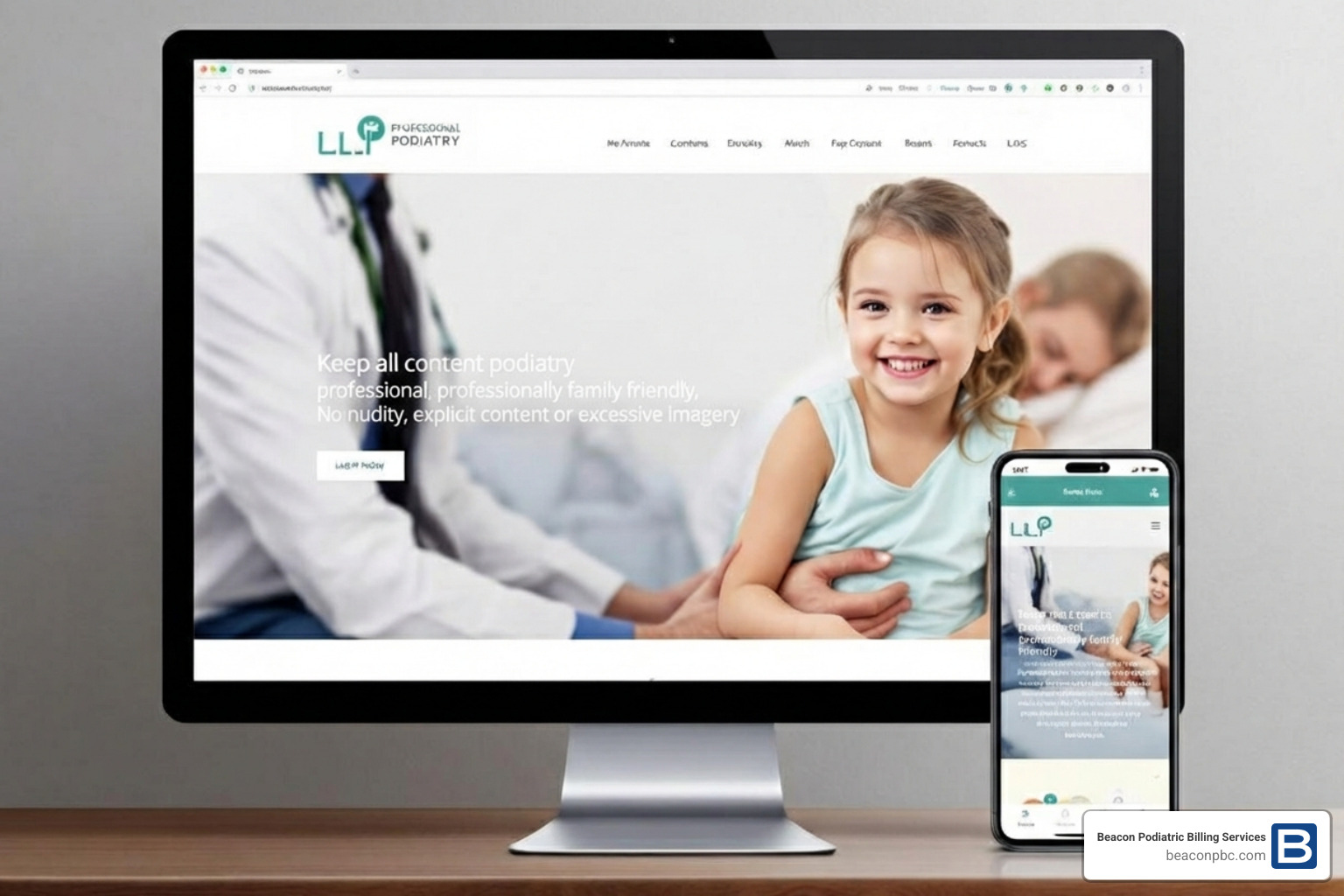
Your practice website acts as your digital front door, and it needs to be welcoming, informative, and functional. An effective website is crucial for converting casual browsers into new patients.
- Mobile-First Design: With 56% of consumer traffic coming from mobile devices, your website must look and function perfectly on smartphones and tablets. A responsive design ensures a seamless experience across all devices.
- Fast Page Speed: Patience is a virtue, but not for website loading times. Website conversion rates drop by an average of 2.11% with each additional second of page load time (between 0-9 seconds). We recommend using tools like PageSpeed Insights to evaluate and improve your site’s speed.
- Clear Navigation: Patients are looking for specific information. Your site should have intuitive navigation, making it easy to find provider bios, detailed service descriptions, office hours, and contact information.
- Online Booking & Digital Forms: Patients prioritize convenience. 68% are more likely to choose providers who offer online booking, and 62% rank “available appointments when I need them” as most important. Integrating online scheduling and digital patient forms streamlines the patient experience, saving time for both patients and staff.
- Strong Calls-to-Action (CTAs): Guide visitors to take the next step, whether it’s “Schedule Appointment,” “Request a Consultation,” or “Learn More.”
Essential Digital Strategies for Podiatry Practice Growth
Beyond your website, a comprehensive digital strategy ensures your practice is visible and trustworthy online.
- Local SEO (Search Engine Optimization): When people search for healthcare providers, they almost always include a location (e.g., “podiatrist Las Vegas NV” or “foot doctor New Jersey”). As such, “all searches are local.” Local SEO is about optimizing your online presence to rank higher in these local search results.
- Google Business Profile (GBP): Claiming and optimizing your GBP (formerly Google My Business) is paramount. Google is the most popular website, and an optimized GBP listing helps your practice appear in local search results and on Google Maps. Ensure consistency in your Name, Address, and Phone number (NAP) across all online listings. Include photos, videos, FAQs, and a compelling description.
- Local Citations & Directories: Getting listed in reputable online directories like the American Podiatric Medical Association (APMA) and the American Board of Podiatric Medicine, as well as general healthcare directories like Healthgrades and Yelp, validates your business and boosts your local search presence.
- Content Marketing: Create valuable, informative content that addresses common foot and ankle conditions. A blog on your website, for example, can cover topics like “managing plantar fasciitis in Ashland KY” or “diabetic foot care tips for seniors in Succasunna NJ.” This positions you as an expert and helps your website rank for condition-specific keywords.
- Online Reputation Management: 90% of patients use online reviews to evaluate physicians before booking their first appointment. Your online reputation is the digital equivalent of word-of-mouth.
- Encourage Reviews: Actively ask satisfied patients for reviews. Tools like GatherUp can automate SMS or email review requests, making it easy for patients to share their positive experiences.
- Respond Thoughtfully: Respond to all reviews, positive and negative. This shows you value patient feedback and are committed to excellent care.
Optimizing Operations for Profitability and Sustainability
While attracting new patients is vital for podiatry practice growth, it is only one piece of the puzzle. True, sustainable growth also hinges on operational efficiency, patient retention, and robust financial health. It is about working smarter, not just harder, and ensuring every aspect of your practice contributes to its long-term success.
Leveraging Technology for a Better Patient Experience
Technology is no longer just a convenience; it is a critical tool for improving both patient experience and practice efficiency.
- EHR Systems: Electronic Health Records (EHRs) streamline clinical workflows, reduce paperwork, and ensure accurate patient data. Modern podiatry-specific EHRs can even offer custom content and templates, improving documentation and billing accuracy.
- Telehealth: The pandemic accelerated telehealth adoption, and many patients still prefer virtual visits for convenience. Telehealth removes barriers like transportation or mobility issues, expanding your reach and improving accessibility. You can market your telehealth capabilities, especially to patients in service areas like North Carolina or Nevada, with targeted messaging.
- Patient Portals: Secure online patient portals empower patients to schedule appointments, request prescription refills, access their health records, and communicate with your staff.
- Automated Reminders: Automated appointment reminders via text or email can reduce no-show rates and improve schedule efficiency.
- Streamlined Check-in: Digital intake forms and virtual kiosks can reduce wait times and administrative burden, allowing patients to complete necessary paperwork before they even arrive. Patients often prioritize a short wait and a doctor who is a good listener.
By embracing these technologies, you can improve the patient experience and free up staff time, allowing your team to focus on providing high-quality care. For more insights into optimizing your practice, explore the resources on Practice Management & Growth.
Beyond Marketing: Key Operational Metrics for Podiatry Practice Growth
Defining “growth” solely by patient volume can be misleading. For true podiatry practice growth, you should focus on profitability and sustainability. Many practice-management experts recommend defining growth in terms of profitability, not just an increase in patient numbers. This requires a keen eye on key performance indicators (KPIs) that reveal the true health of your practice.
Crucial KPIs for podiatry practices include:
- Monthly Charges & Monthly Collections: These are fundamental for tracking revenue.
- New Patients & Total Patient Visits: While patient volume matters, aim for a healthy new patient ratio of around 20% to existing patient appointments for consistent growth.
- Accounts Receivable (AR): Monitor your AR closely, especially “days in AR.” Claims over 90 days should ideally be less than 20% of your total AR.
- Per-Visit Value (PVV): This measures how much revenue your practice generates per patient visit. Improving PVV involves optimizing clinical protocols, offering comprehensive treatment plans, and leveraging ancillary services.
- Net Collection Ratio: This indicates the percentage of collectible revenue actually collected. The optimal net collection ratio should be greater than 93%.
- First-Pass Denial Rate (FPDR): This is the percentage of claims denied on the first submission. Ideally, your FPDR should be less than 5%. A high FPDR can be costly; reworking a denied claim can cost around $25, meaning a 20% FPDR on 20,000 claims could result in $100,000 in rework costs.
By diligently tracking these metrics, you can identify areas for improvement, make data-driven decisions, and ensure your practice is not just busy, but also profitable. For a deeper dive into these vital indicators, review the guide Live and Die by KPIs: The Podiatrist’s Guide to Practice Growth and Profitability and explore more on Financial Health KPIs.
Defining Your Unique Value and Achieving Work-Life Balance
Podiatry practice growth should serve your goals, both professional and personal. It is about building a thriving practice that aligns with your vision and allows for a fulfilling life, while avoiding the common pitfall of burnout. This means identifying what makes your practice special and intentionally designing your growth strategy around it.
Identifying Your Differentiators and USP
To stand out in a competitive market like Jersey City NJ or Charlotte NC, you need to define your Unique Selling Proposition (USP). Your USP is the intersection of what your patients want and what your practice excels at. It is what makes you different and better than the competition.
Consider:
- Specialized Services: Do you offer advanced treatments for specific conditions, such as complex diabetic foot care or sports podiatry?
- Advanced Technology: Do you use tools like 3D foot scanners, laser therapy, or other innovations that set you apart?
- Patient-Centric Approach: Is your practice known for exceptional patient communication, empathy, or a uniquely comfortable environment?
- Convenience: Do you offer same-day appointments, extensive online booking options, or multiple accessible locations across areas such as New Jersey or Nebraska?
Once you identify these differentiators, craft offers that appeal to your target market and match your USP. For example, if your USP is faster recovery, you might offer a package rate for three appointments. If it is convenience, you could promise to set an appointment within 24 hours. Consistently communicate this unique value across all your marketing channels to build a strong, recognizable brand.
Growing Your Practice Without Losing Yourself
The mantra “grow or die” can be misleading and even detrimental. Bigger is not always better. Better is better. True podiatry practice growth should be aligned with your personal life goals. Before pursuing expansion, ask yourself:
- Who do you want to be in your personal life?
- Who do you want to be in your social life?
- Who do you want to be in your spiritual life?
- Who do you want to be in your professional life?
Your answers should guide your growth strategy. For instance, if your goal is more personal time, expanding by opening a second location or bringing on an associate might complicate things more than it helps. Some experienced podiatrists point out that it is often cheaper and easier to take occasional vacations than to develop an associate or partner.
Consider a phased approach to staffing, based on your cash flow, rather than hiring too quickly. Look for opportunities to outsource non-core tasks, such as administrative duties or, critically, your medical billing. This allows you to focus on patient care and strategic growth without getting bogged down in day-to-day operational details. Balancing practice growth with personal life is key to avoiding burnout and ensuring long-term satisfaction. For more insights on solo practice management, you might find value in these 5 Pearls of Solo Practice.
Frequently Asked Questions about Podiatry Practice Growth
How do I know if my marketing is working?
Measuring the effectiveness of your marketing efforts is crucial for sustainable podiatry practice growth. We need to track specific Key Performance Indicators (KPIs):
- Patient Acquisition Cost (PAC): How much does it cost to acquire one new patient through a specific channel?
- Conversion Rates: What percentage of website visitors or leads convert into actual appointments?
- Lead Sources: Where are your patients coming from (e.g., Google search, social media, referral, online directory)? Use call tracking software and ask patients directly “How did you hear about us?”
- Website Traffic & Engagement: Monitor visits, bounce rate, time on page, and goal completions (e.g., online appointment requests).
- Online Reviews: Track the number and sentiment of new reviews.
By consistently monitoring these metrics, we can identify what’s working, what’s not, and optimize our strategy for better ROI.
How much should I spend on marketing?
There’s no one-size-fits-all answer, as marketing budgets vary significantly based on your practice’s size, growth goals, and market competitiveness. A common guideline for small businesses is to allocate 3-10% of gross revenue to marketing. However, this can fluctuate:
- Newer practices or those aiming for rapid growth might invest a higher percentage initially.
- Established practices might maintain a lower percentage once a strong patient base is built.
The key is to focus on ROI. Start with a smaller budget, test different channels, and scale what proves effective. For instance, six months of targeted Google search ads (including ad space and management) might cost $6,000-$12,000, offering a more direct and measurable return than a high-cost billboard.
Is it better to focus on attracting new patients or retaining existing ones?
Both are absolutely crucial for comprehensive podiatry practice growth, but for different reasons. Smart business owners understand that retaining existing patients is often more cost-effective than acquiring new ones.
- Patient Retention: Loyal patients provide consistent revenue, are more likely to refer others (word-of-mouth is still powerful!), and require less marketing spend. Strategies include providing excellent care, sending regular educational communications (email newsletters, text messages), offering loyalty programs, and making scheduling easy. Patients who feel valued and heard are more likely to stay.
- New Patient Acquisition: New patients are essential for expanding your practice, reaching new demographics, and offsetting any natural patient attrition. They bring fresh energy and opportunities for growth.
A balanced strategy that prioritizes both acquisition and retention will yield the most sustainable podiatry practice growth.
Take the Next Step Towards Sustainable Growth
Achieving sustainable podiatry practice growth requires a holistic approach—one that integrates smart marketing, efficient operations, and robust financial health. We’ve explored how shifting from outdated marketing tactics to information-driven patient engagement can attract the right patients, how building a strong digital footprint makes your practice findable, and how leveraging technology can streamline operations and improve patient experience.
Defining growth as profitability and aligning it with your personal goals is key to avoiding burnout and building a practice you love. As your practice grows, managing the revenue cycle becomes critical to profitability. A specialized partner like Guide Podiatric Billing Services can ensure your financial operations are as healthy as your patient outcomes, maximizing collections and streamlining your billing processes.
Ready to open up your practice’s full potential? Take the next step towards a more efficient, profitable, and fulfilling practice journey. Explore how our specialized billing services can support your growth by visiting More info about our Billing Services.